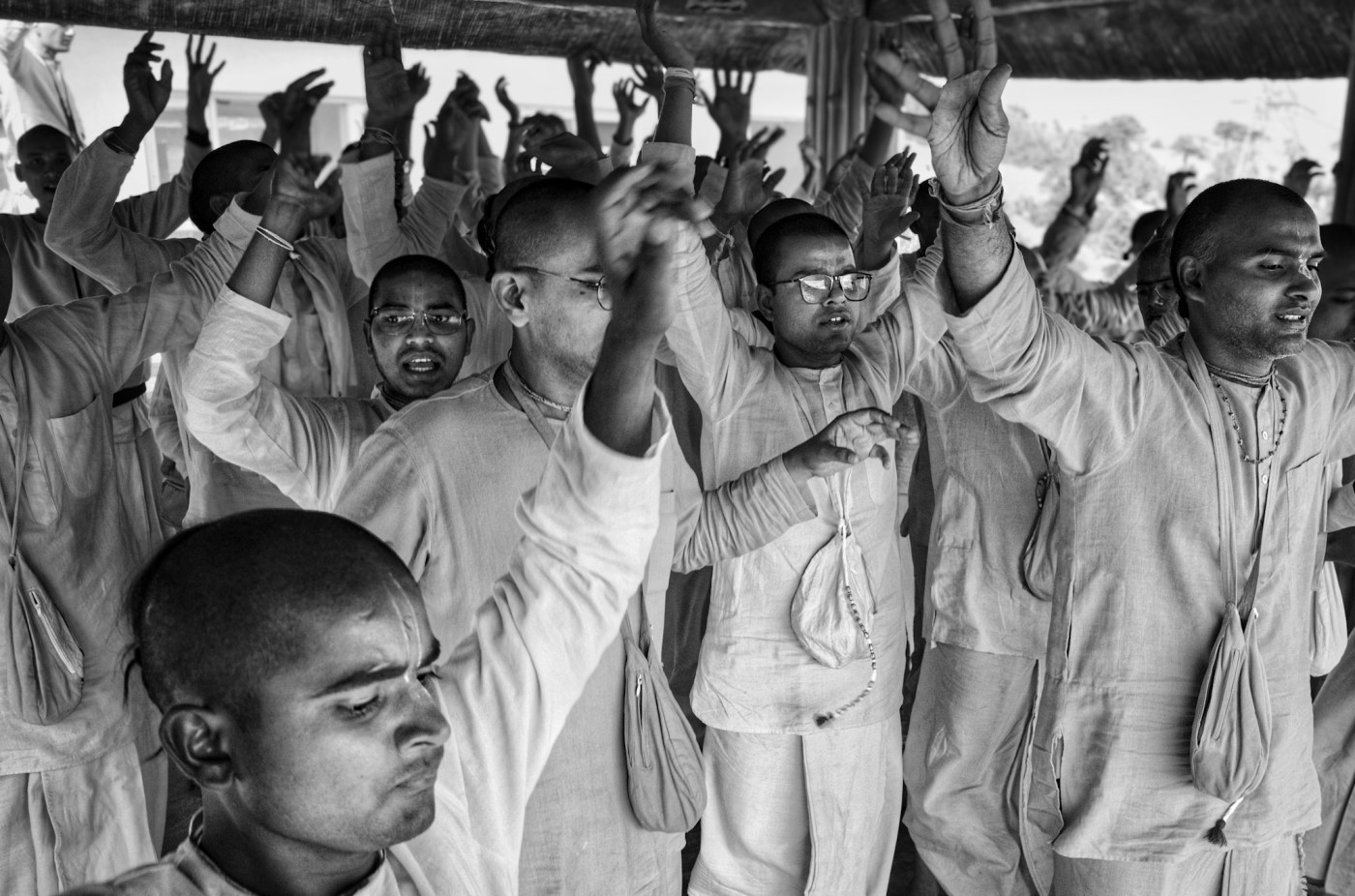
I was visiting a remote temple when, quite unexpectedly, a group of Hindu priests arrived. They arrived in a quiet tide of white, filling the small temple doorway without a sound.I had my camera with me, and what followed was something I had not anticipated seeing that day.
They immediately began paying their respects to the temple.
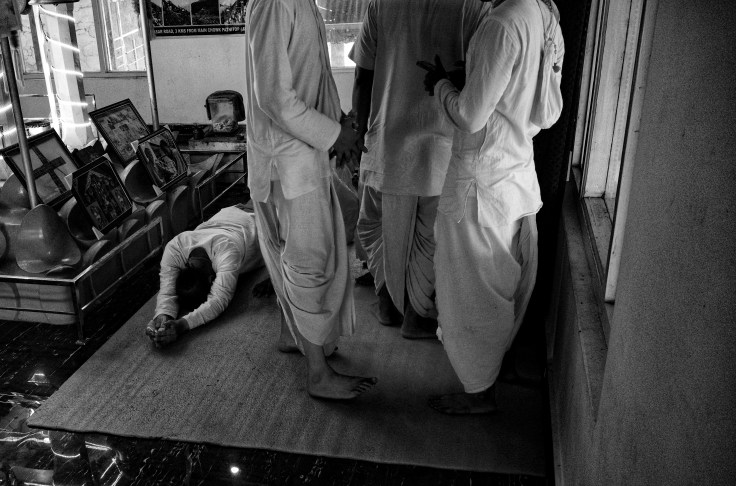
They had already fallen to the floor—foreheads pressed to stone, hands clasped in surrender before the ancient shrine.
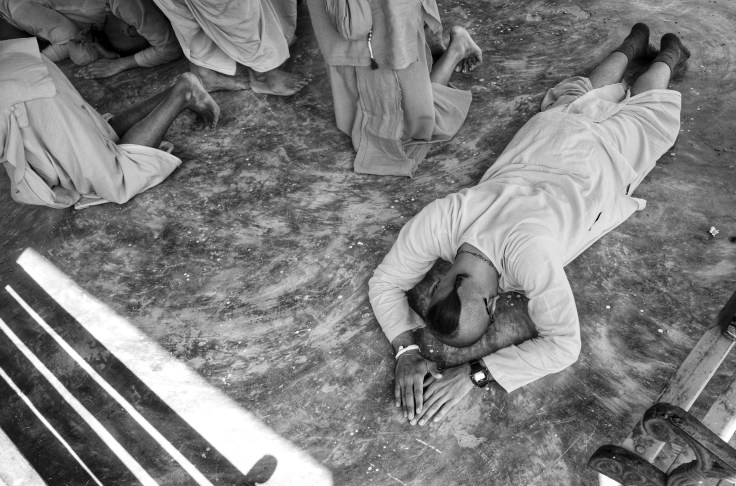
What mesmerized me was the geometry of their devotion. They bowed not just once, but toward every point of the compass—north, south, east, west—each prostration a conversation with a different face of the divine.
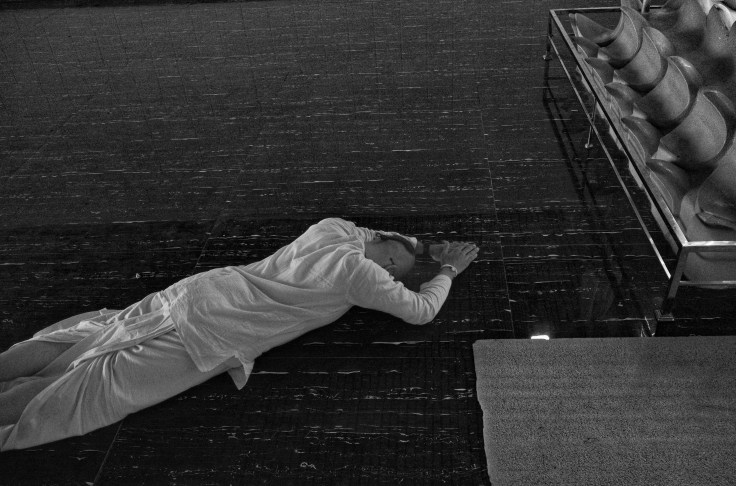
One devotee lay completely still before the massive stone feet of the deity, his body tracing the shape of humility against the cold marble. In that moment, the boundary between man and temple floor seemed to dissolve entirely.
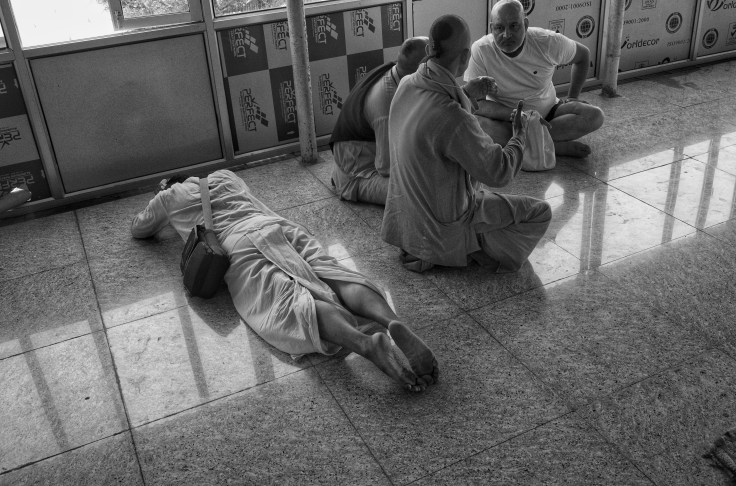
A gentle-voiced priest noticed my confusion and beckoned me closer. “We bow to the directions,” he explained, “because the sacred is not in one place—it is the place.”
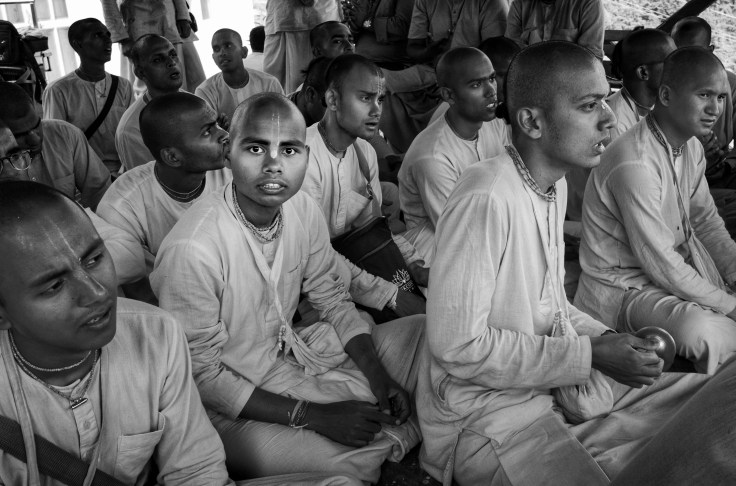
When the last bow was complete, they arranged themselves in tight rows with the ease of long practice. Young monks with tilak marks and bright eyes sat shoulder to shoulder, their breathing already syncing into one expectant rhythm.
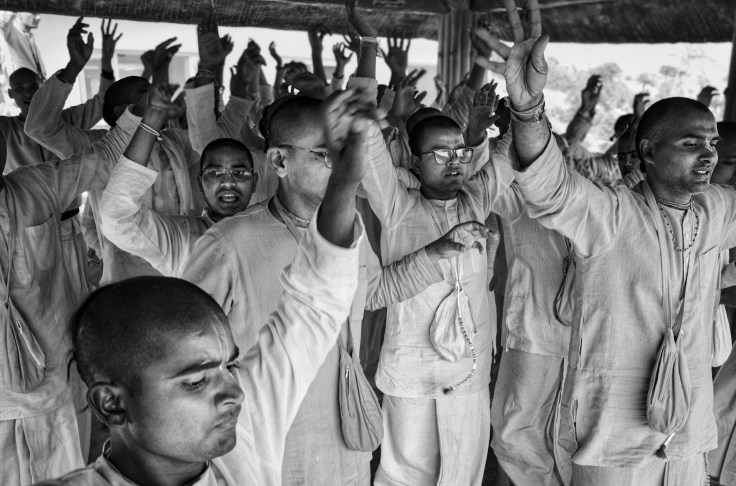
Then the chanting began—voices braided together into something ancient and sweet, flooding the temple with a melody that seemed to predate the stones themselves. When the last note faded, they rose quietly, walked to their waiting buses, and vanished into the afternoon—leaving me alone with the echo.
 Life, Seen Honestly
Leave a comment