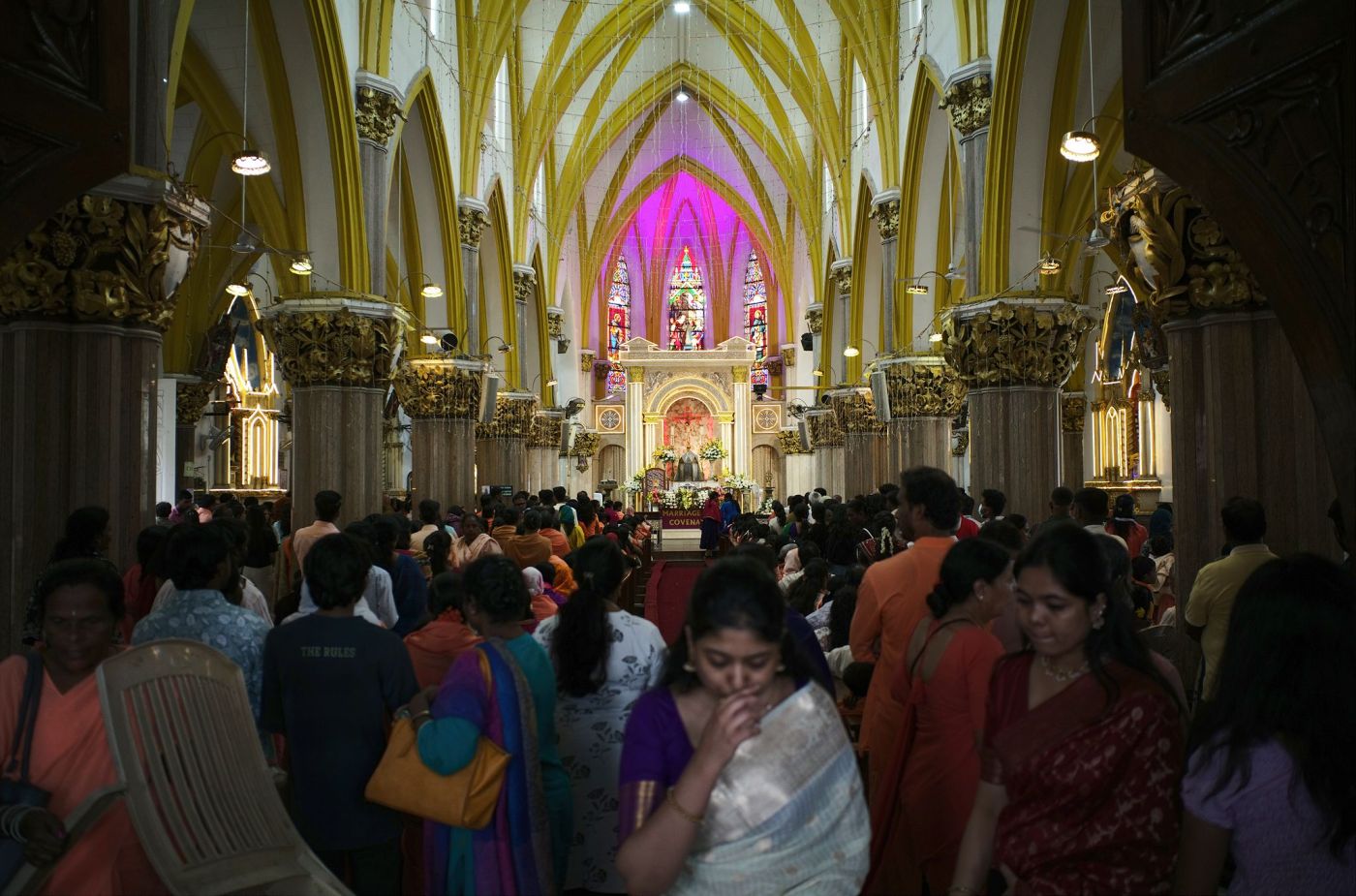
I spent a day at the feast of St. Mary’s Basilica in Bangalore, not as a participant but as a visitor. I walked the streets around the church, stood in the crowds, and watched the festival happen around me — families arriving packed into trucks, women in matching saris waiting for hours, vendors doing business under the church domes, police holding the barricades, nuns behind a glass partition. These frames are simply what I noticed.
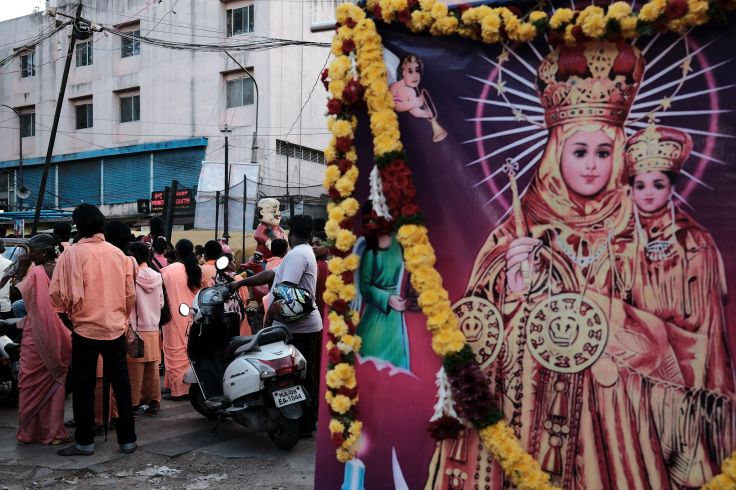
Before I ever entered the church, the festival had spilled onto the street. A towering poster of Mary, framed in marigold garlands, watched over the crowd below — scooters, families, vendors, all pressing past in the afternoon heat. Faith here was not tucked away inside the basilica; it had taken over the entire neighborhood.
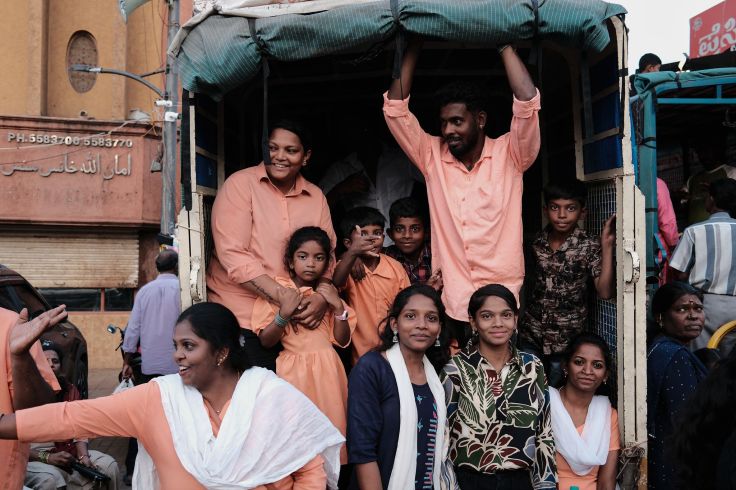
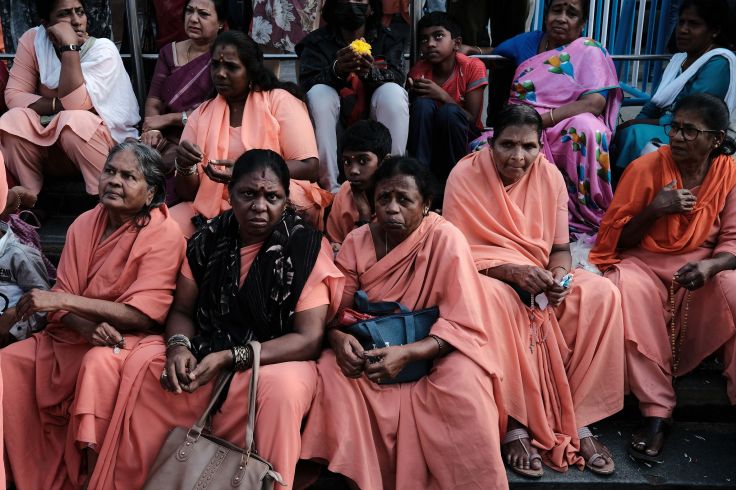
Across from the basilica, the city carried on with its own rituals. For a few days a year, devotion and daily commerce share the same street. They arrived the way festival crowds always do in this city — together, and in whatever vehicle was available. A family packed into the back of a small truck, children balanced on laps, a man holding the tarpaulin frame above his head. Nobody seemed to mind the squeeze. If anything, the ride was part of the occasion. The women came dressed alike in peach saris, seated shoulder to shoulder along the barricades. Some prayed with rosaries, some fanned themselves, some simply watched the crowd with the patience of people who had done this many times before. Hours of waiting were folded quietly into the day.
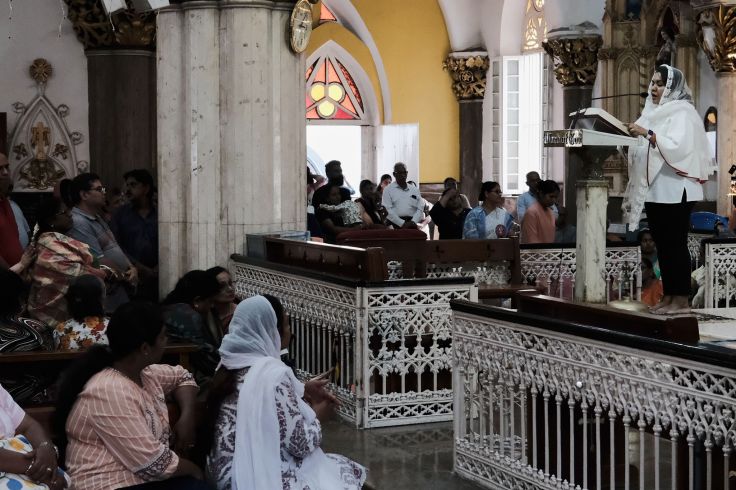
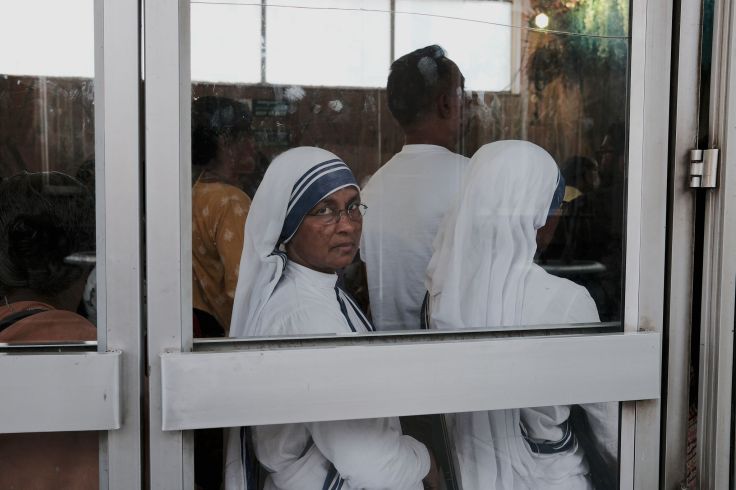
A nun leads the congregation from the lectern. Prayers at a side inside, the basilica was full well before the service began. The gold ribbed vaults pulled every eye upward, but the congregation filled the floor — a slow current of saris and shirts moving toward the altar. I stood at the back and let the crowd carry me forward. Behind a glass partition, the Sisters of Charity watched the crowd flow past. Their white saris with the blue border were almost luminous against the dark wood. I photographed them through the glass, and the reflections of the crowd layered over their faces — the festival seen twice in one frame.
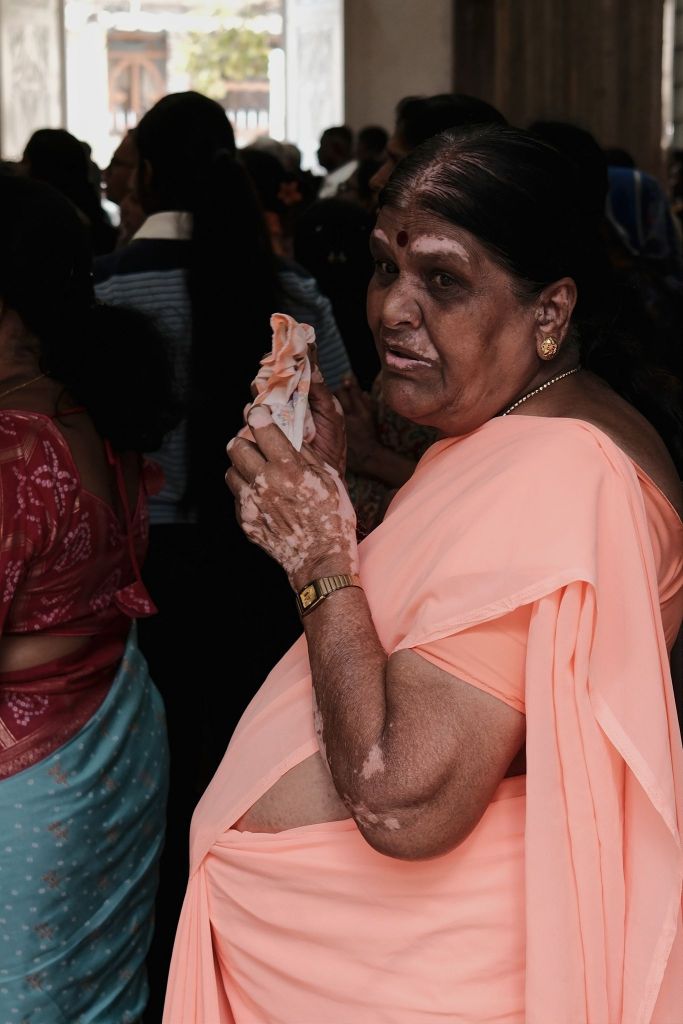
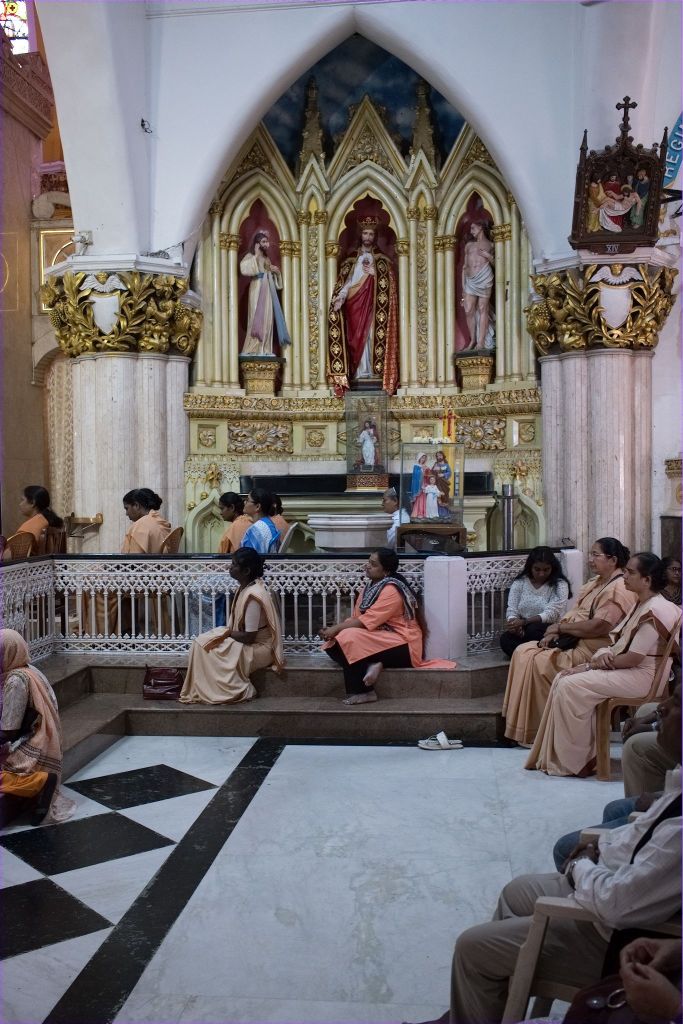
An elderly woman clutching a small cloth, her gaze fixed somewhere beyond the crowd. Around her the festival moved and shouted. She did not seem to notice any of it. Away from the main altar, a smaller shrine held its own congregation. Women knelt on the checkered marble, heads covered, before statues of Christ and the saints. The basilica is large enough that devotion here has many rooms, and not all of them are loud.
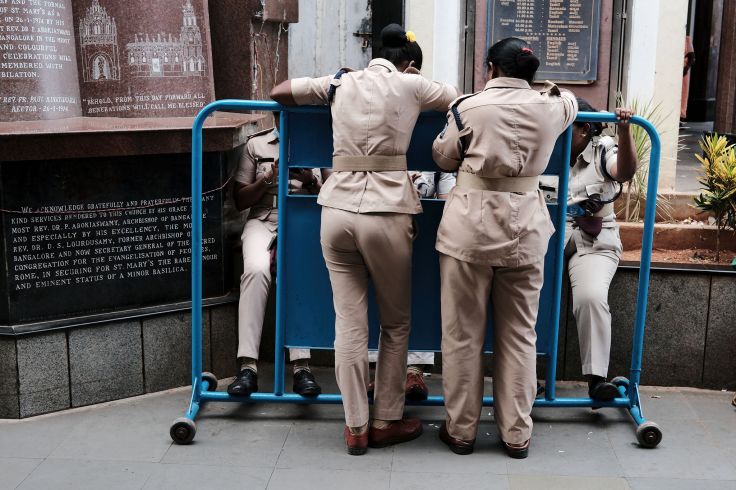
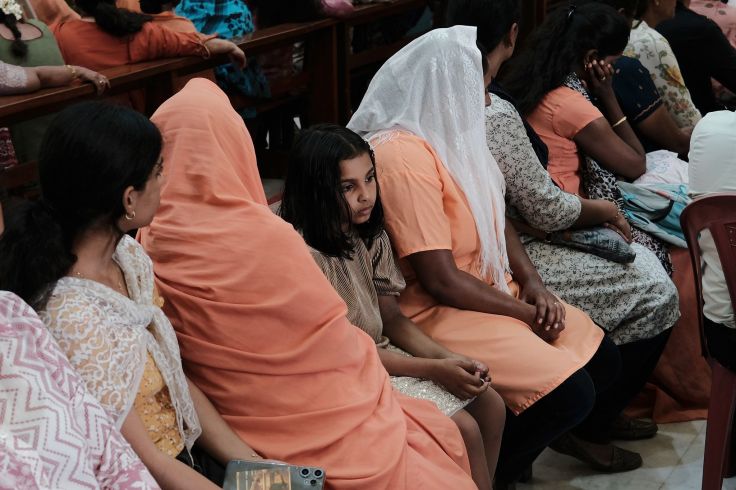
Every festival runs on people you barely notice. Near the entrance, policewomen leaned against a blue barricade, resting between waves of pilgrims. The plaque behind them told the church’s long history in carved granite; in front of it, the day’s quieter work went on. Among the rows of bowed heads, one girl looked up and straight into my camera. She was there with her family, wedged between praying women, and for a second she seemed as curious about me as I was about all of this. Then she looked away, and the crowd closed back over the moment.
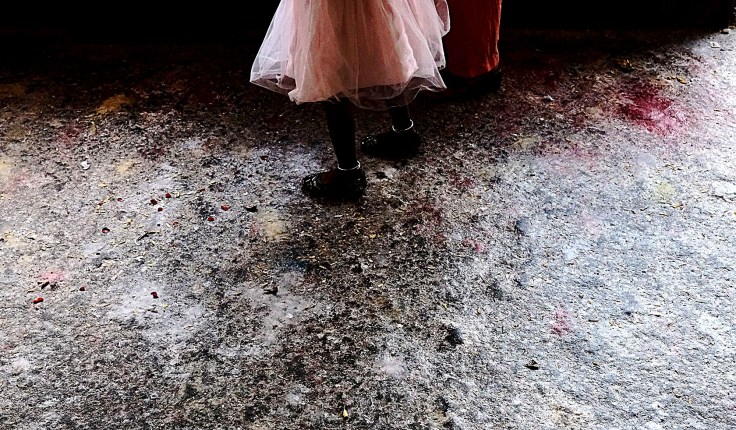
Wax from the candles pilgrims had carried in all day had soaked into the stone, pooling around scattered petals. Thousands of small flames had passed through here and gone out, but the floor remembered them. I photographed it because it seemed like the truest record of the day — what the pilgrims left behind.
 Life, Seen Honestly
Leave a comment