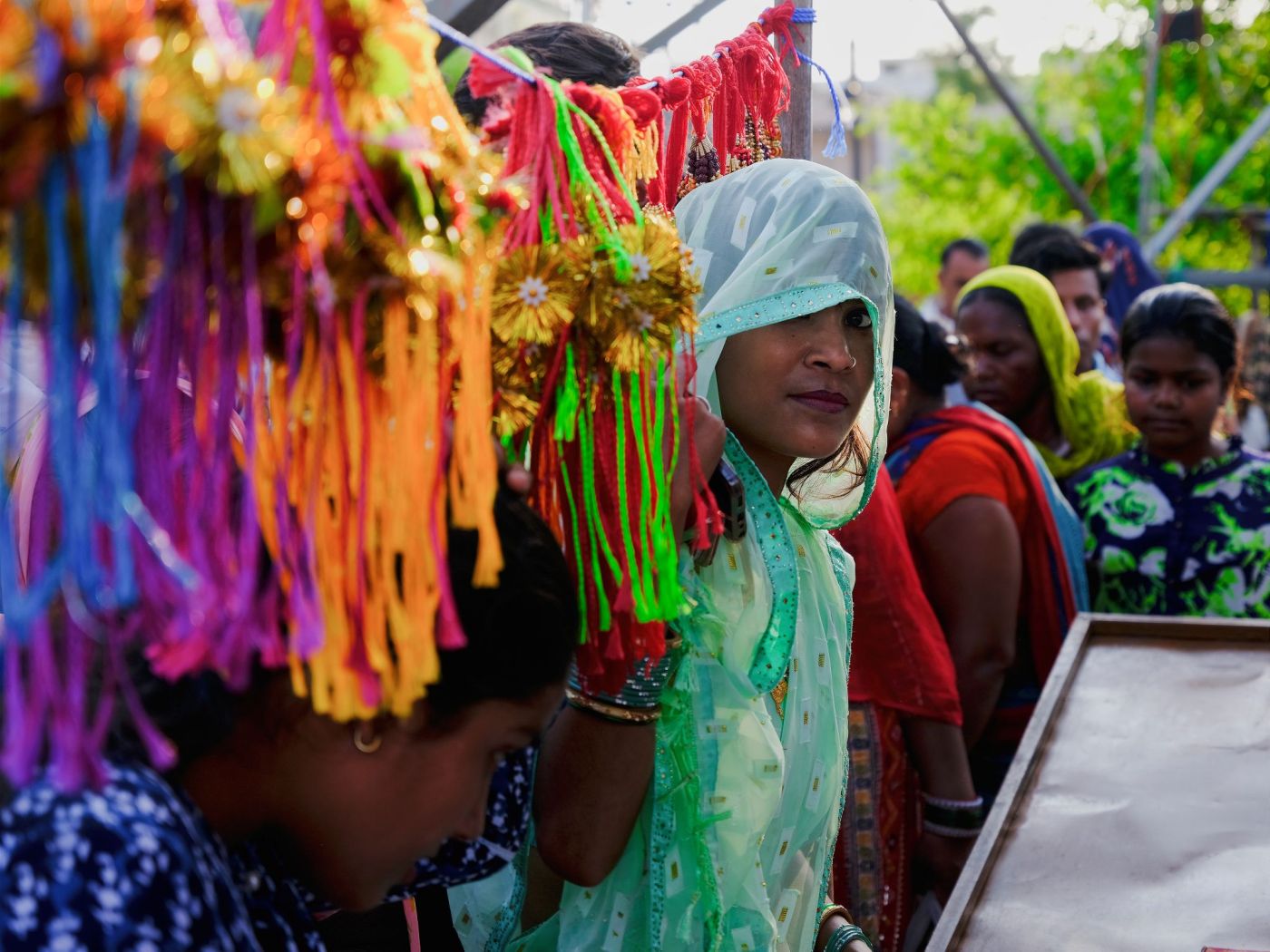
Rakhi is usually spoken about as a festival between brothers and sisters.
But when I walked through the Rakhi stalls, what I kept seeing was something slightly different.
Women.
Women choosing.
Women looking.
Women comparing colors and designs.
Women standing behind curtains of thread and beads, moving through the crowded stalls with children, family and strangers around them.
The brothers are mostly absent from these photographs.
Perhaps that is what interested me.
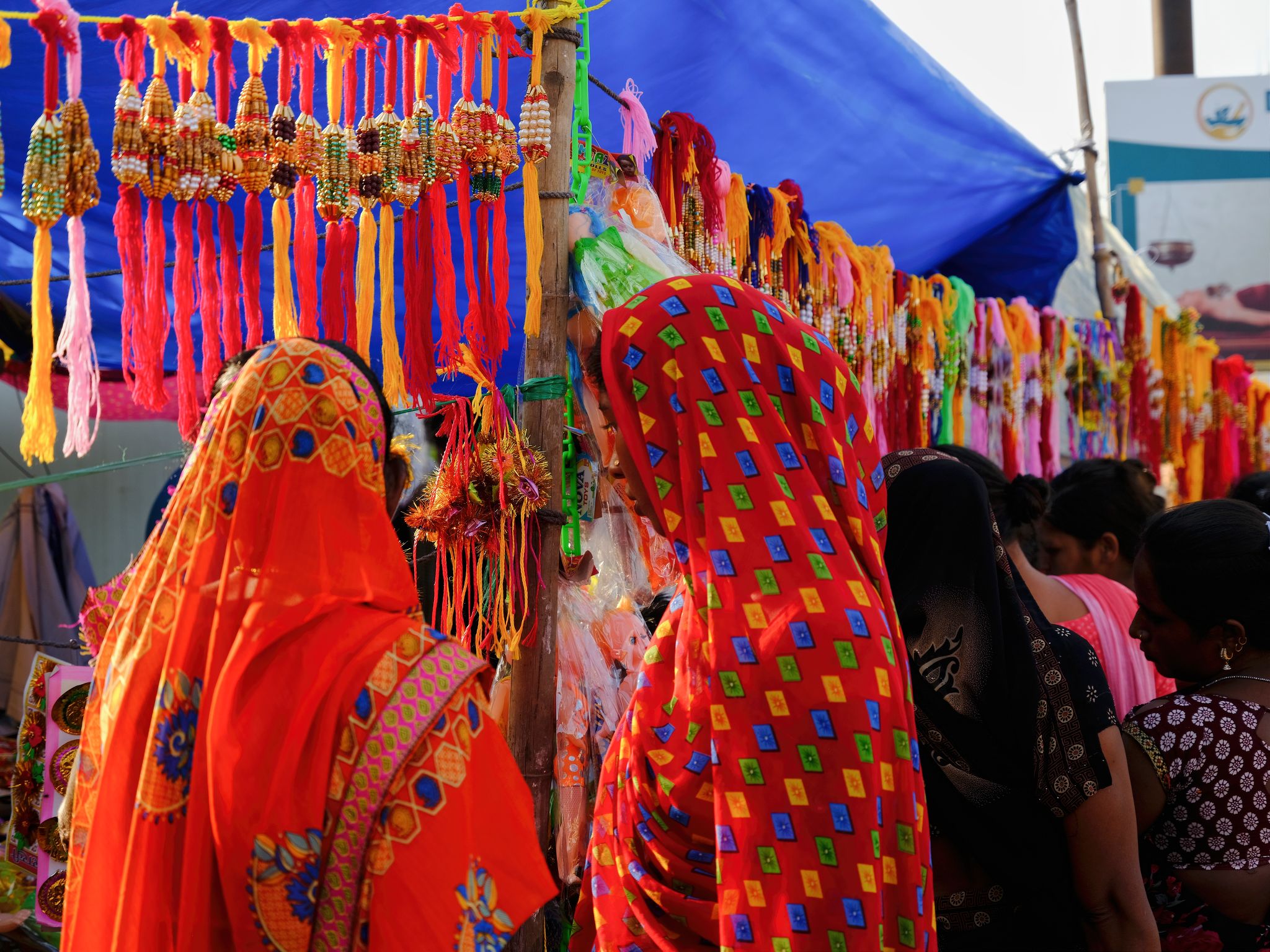
The Rakhi itself is a small object—threads, beads, colors, and decoration—but around it is an entire little world of commerce and anticipation. Stalls are covered with hundreds of Rakhis, hanging in rows like curtains. Red, yellow, orange, pink and green compete for attention. Hands reach through them. Faces appear between them. People disappear behind them.
For the women buying them, this is not simply shopping.
Somewhere in that choice is a person who is not there.
A brother.
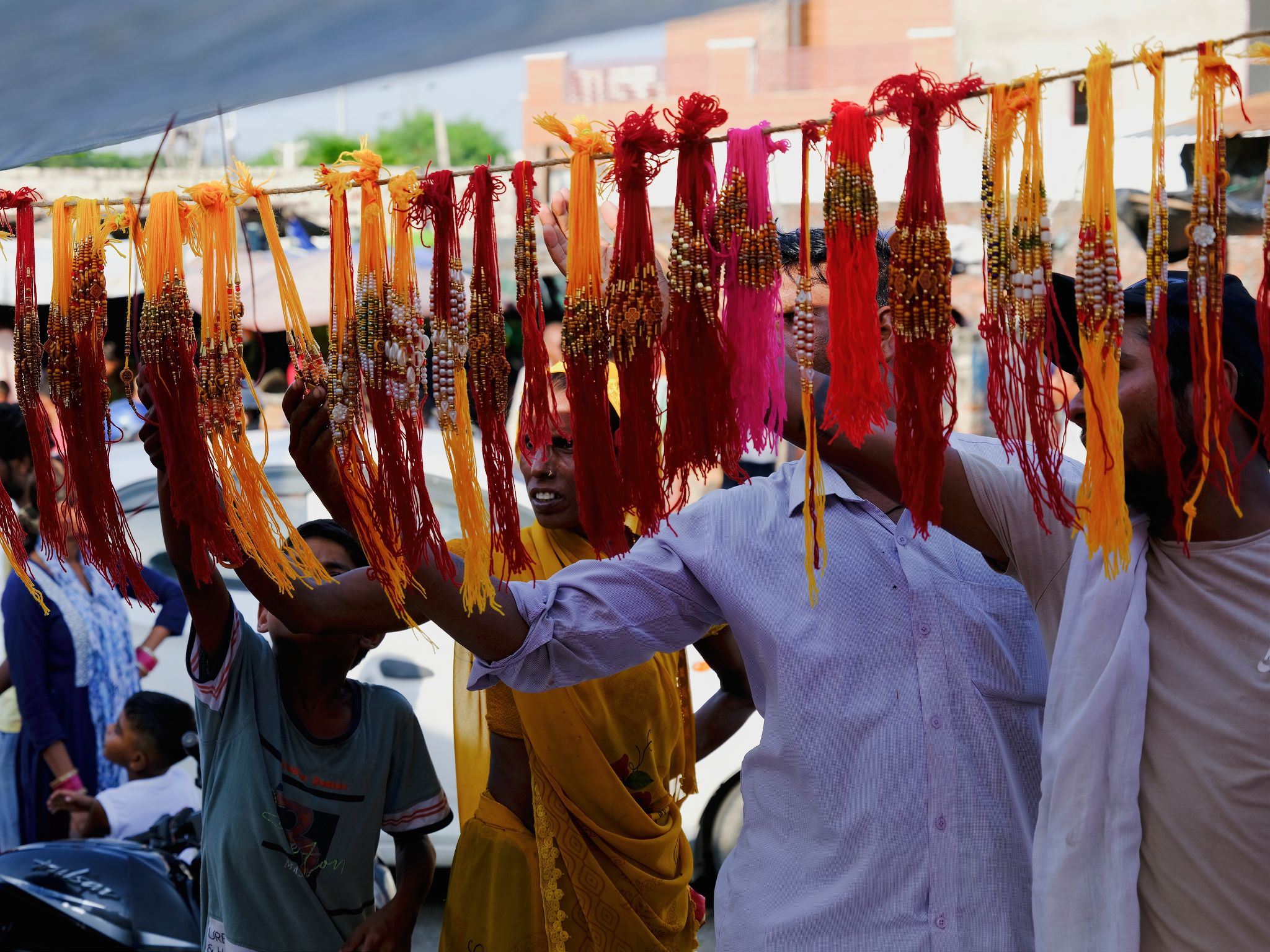
Someone they will tie the Rakhi to, someone they are thinking about while standing among these colors and crowds. I don’t know who they were buying for. I don’t know their stories. But the act of choosing gives the photographs a quiet sense of connection to someone outside the frame.
I found myself photographing through the Rakhis rather than around them.
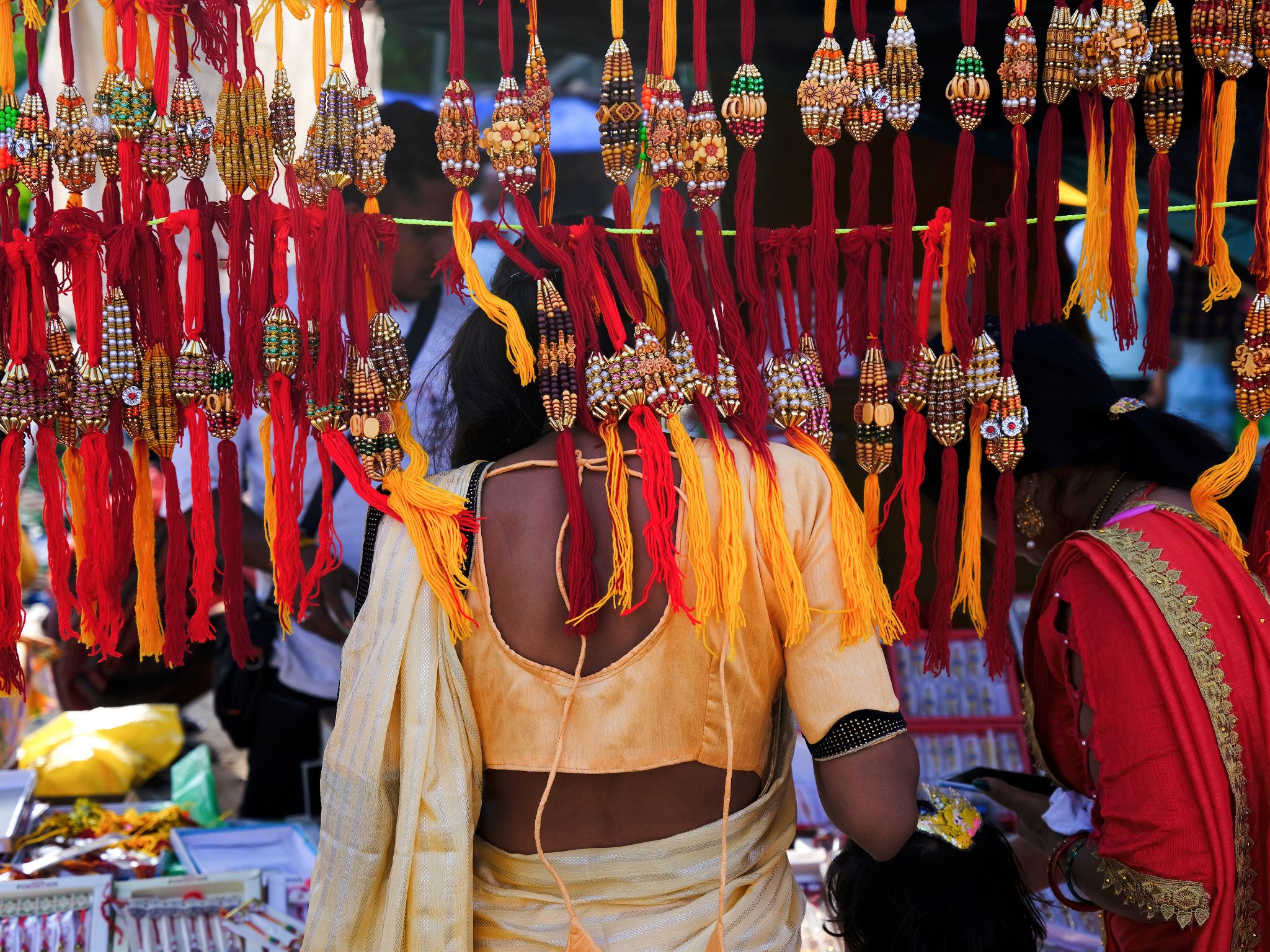
The threads became a kind of visual barrier—sometimes hiding faces, sometimes revealing them, sometimes turning people into fragments. A woman appears behind a curtain of red and yellow. Another is almost completely surrounded by color. In one frame, a face looks directly back at me through the hanging Rakhis. In another, the people become almost secondary to the extraordinary density of color and pattern.
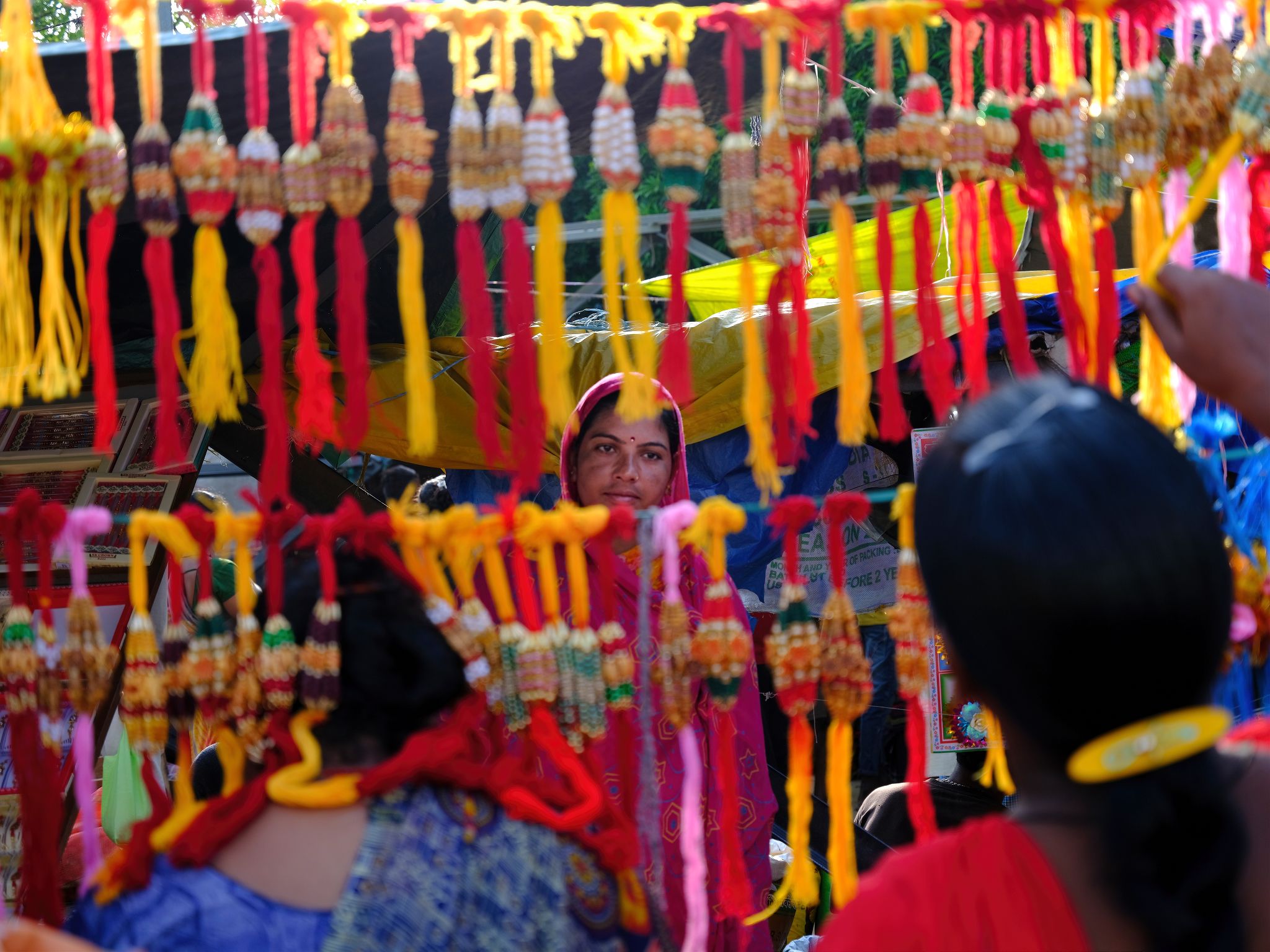
There is a lot of movement in these photographs, but there is also a strange stillness.
People stop to look.
They wait.
They choose.
They move on.
And above them, the Rakhis remain suspended, waiting for their own journey—from a market stall to a wrist, and eventually to someone they were bought for.
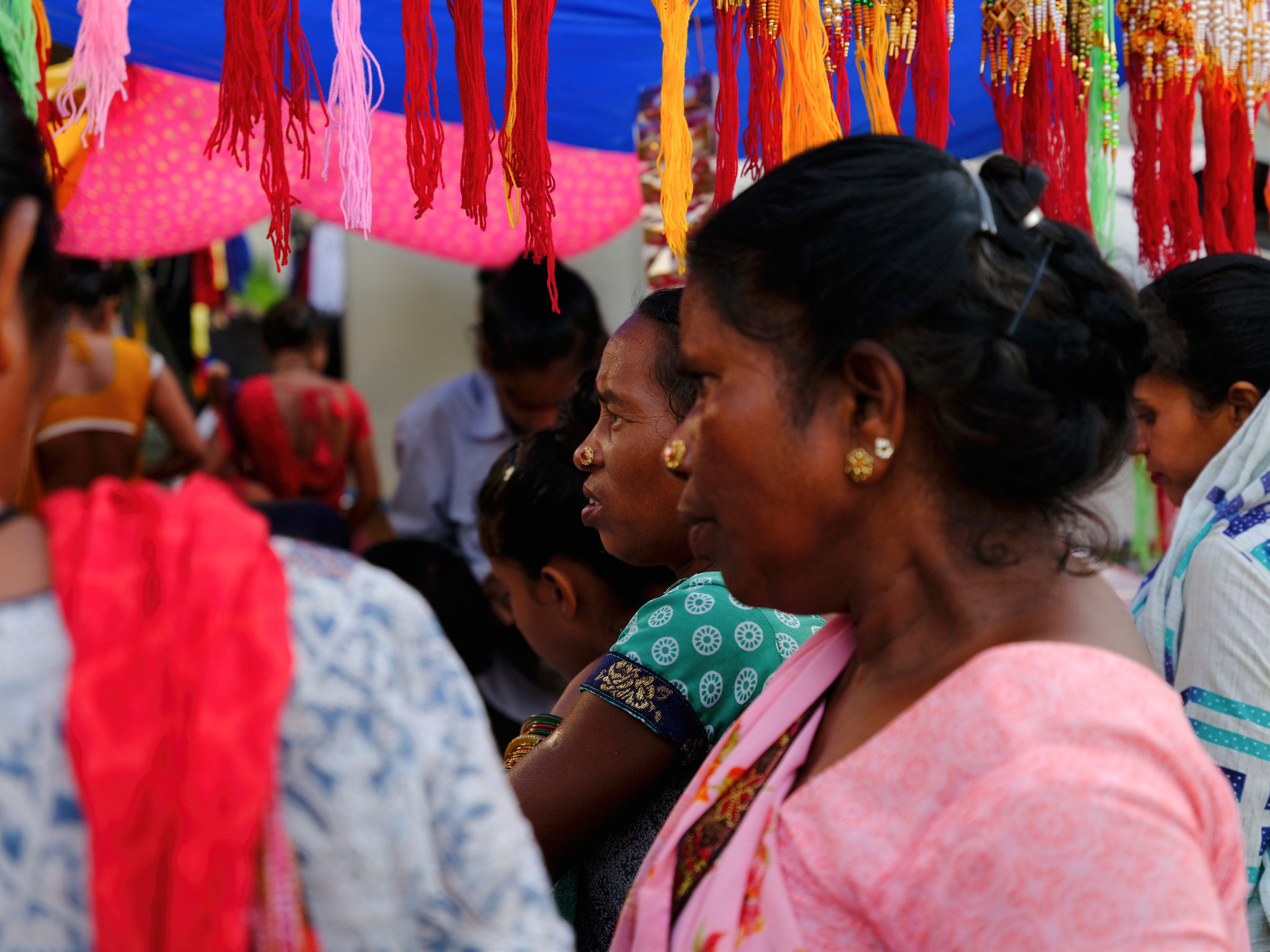
I photographed these frames during Rakhi using a Fujifilm GFX 50S II. I loved the way the camera rendered the colors and the separation between the people and the dense surroundings. But more than the camera, it was the visual richness of the place that kept pulling me in.
For a few hours, I wasn’t particularly interested in photographing the festival.
I was interested in the people who make the festival happen.
And mostly, they were women.
 Life, Seen Honestly
Leave a comment